

Handmade Leather Bags
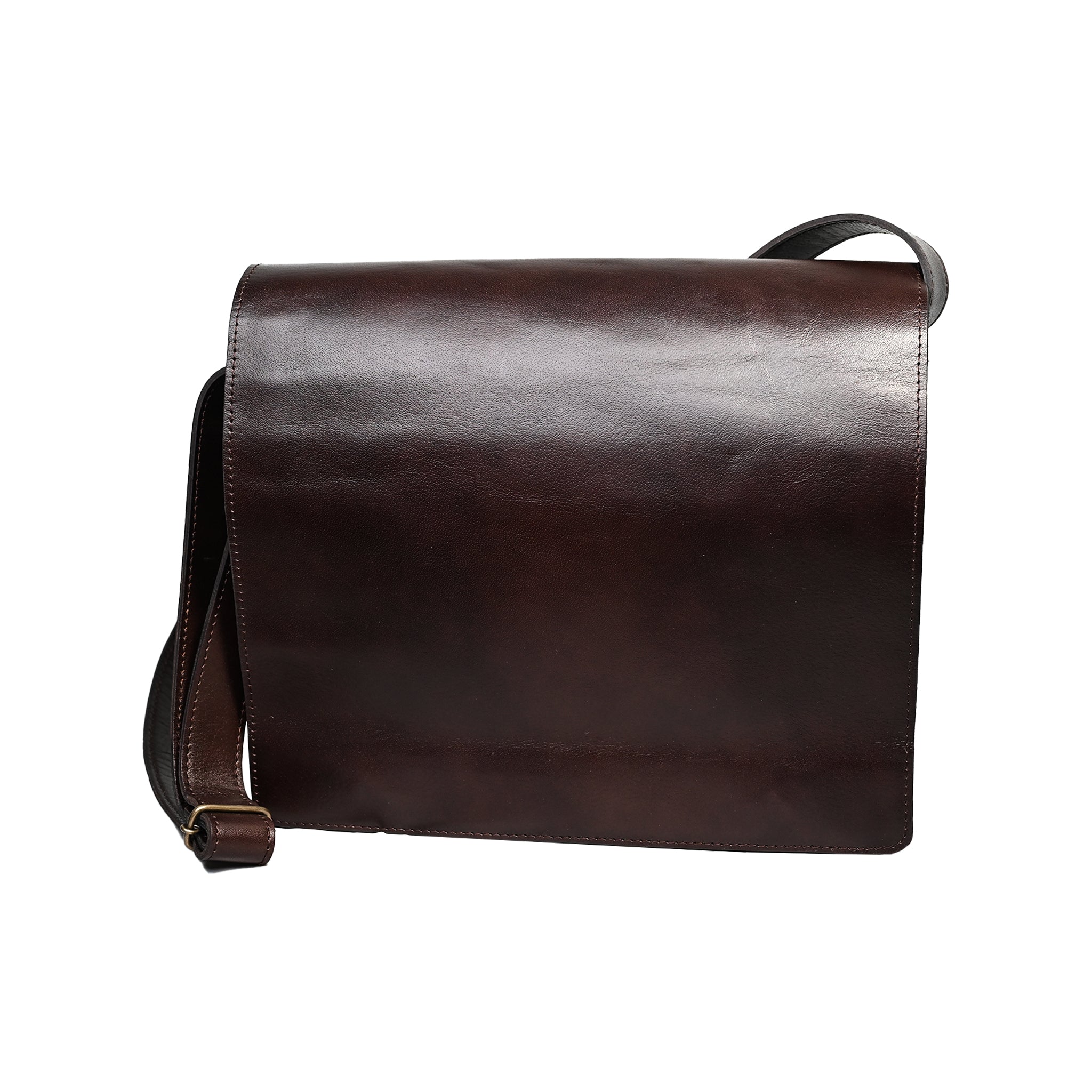
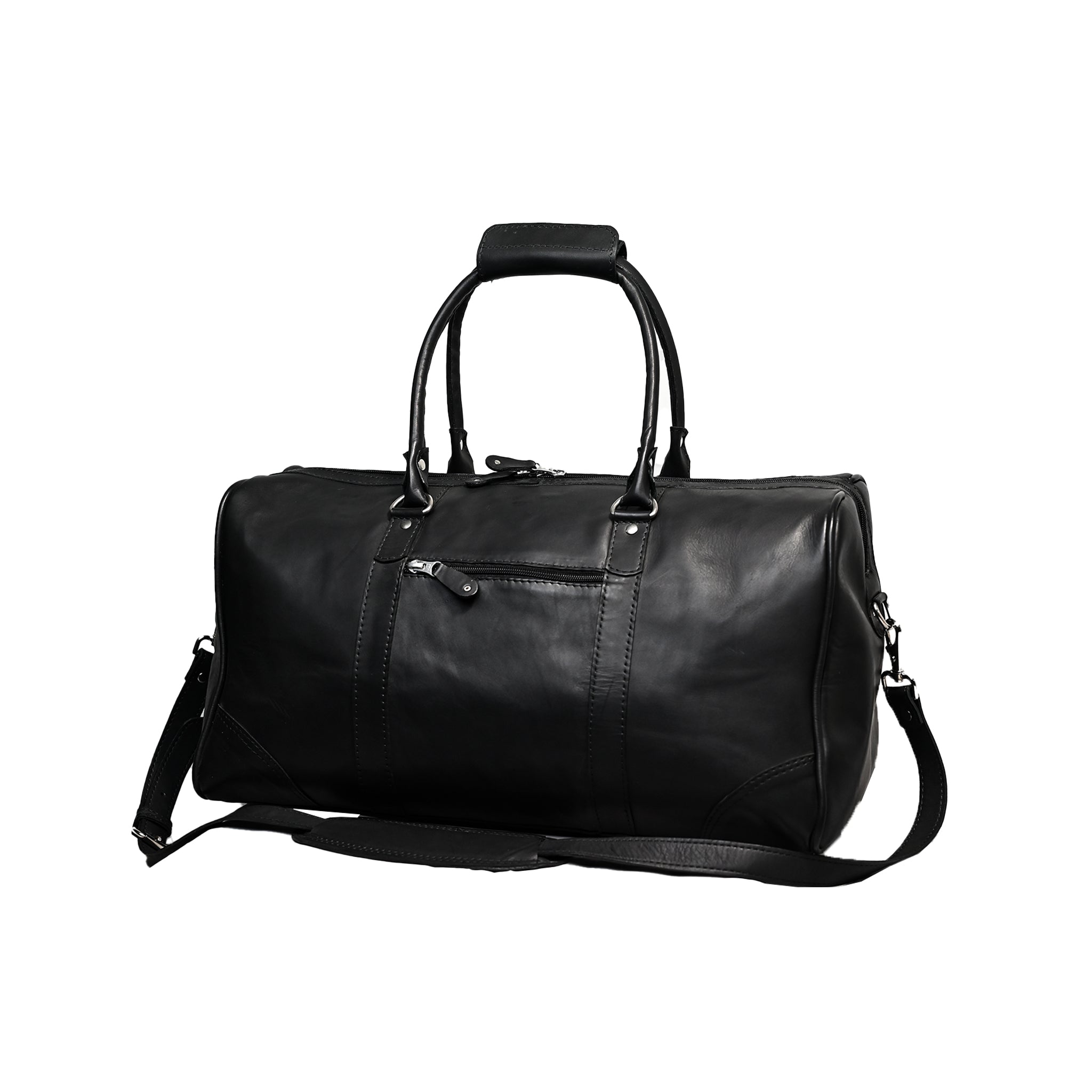
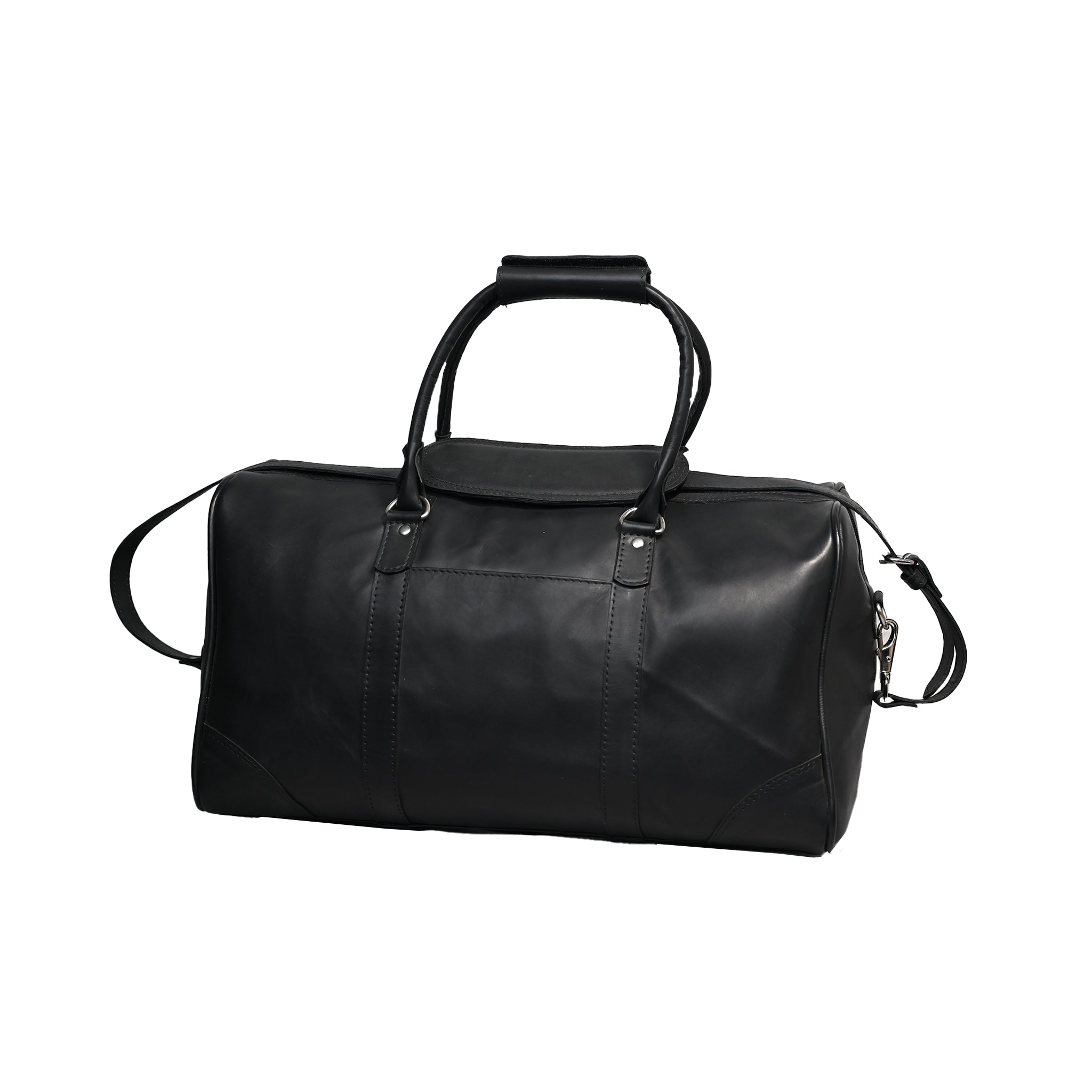
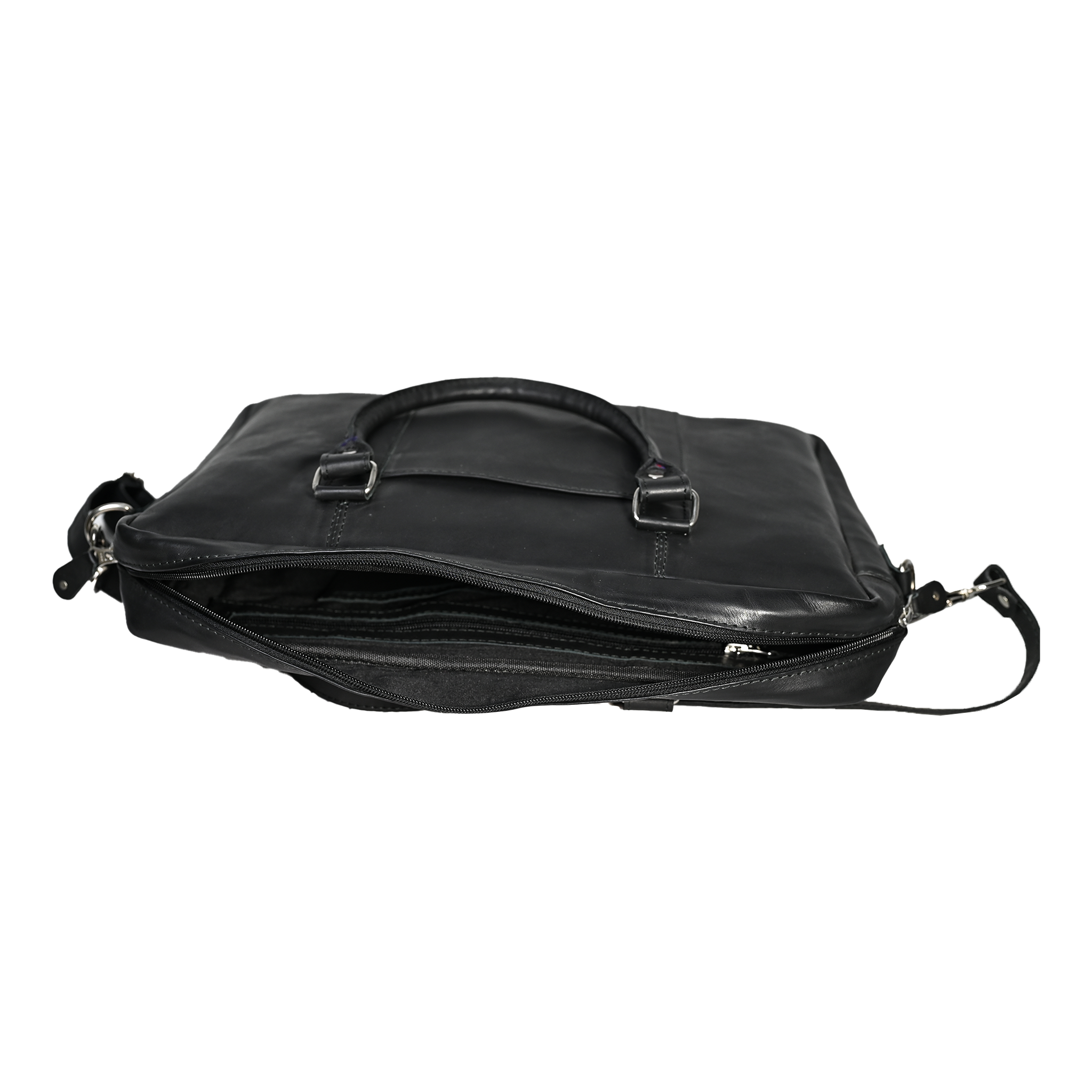
Full-grain cowhide and Crazy Horse buffalo leather, cut and stitched by hand into bags built to be carried every day for years. Messenger bags and briefcases for work, backpacks and weekenders for travel, crossbody bags and totes for everything else. Priced from $189 to $419 CAD, shipped from within Canada, so there are no duties, no customs charges and no brokerage fees to pay at the door.

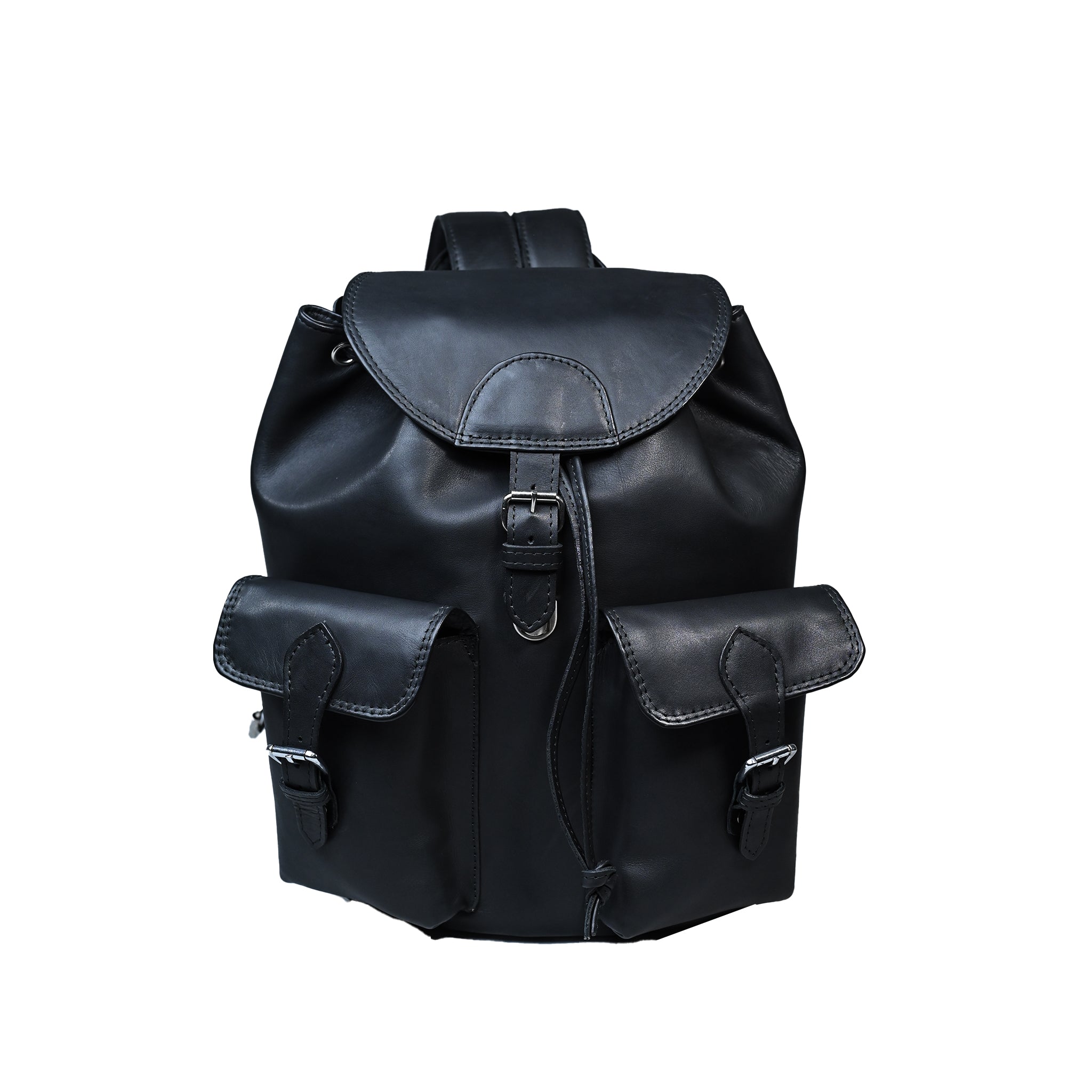
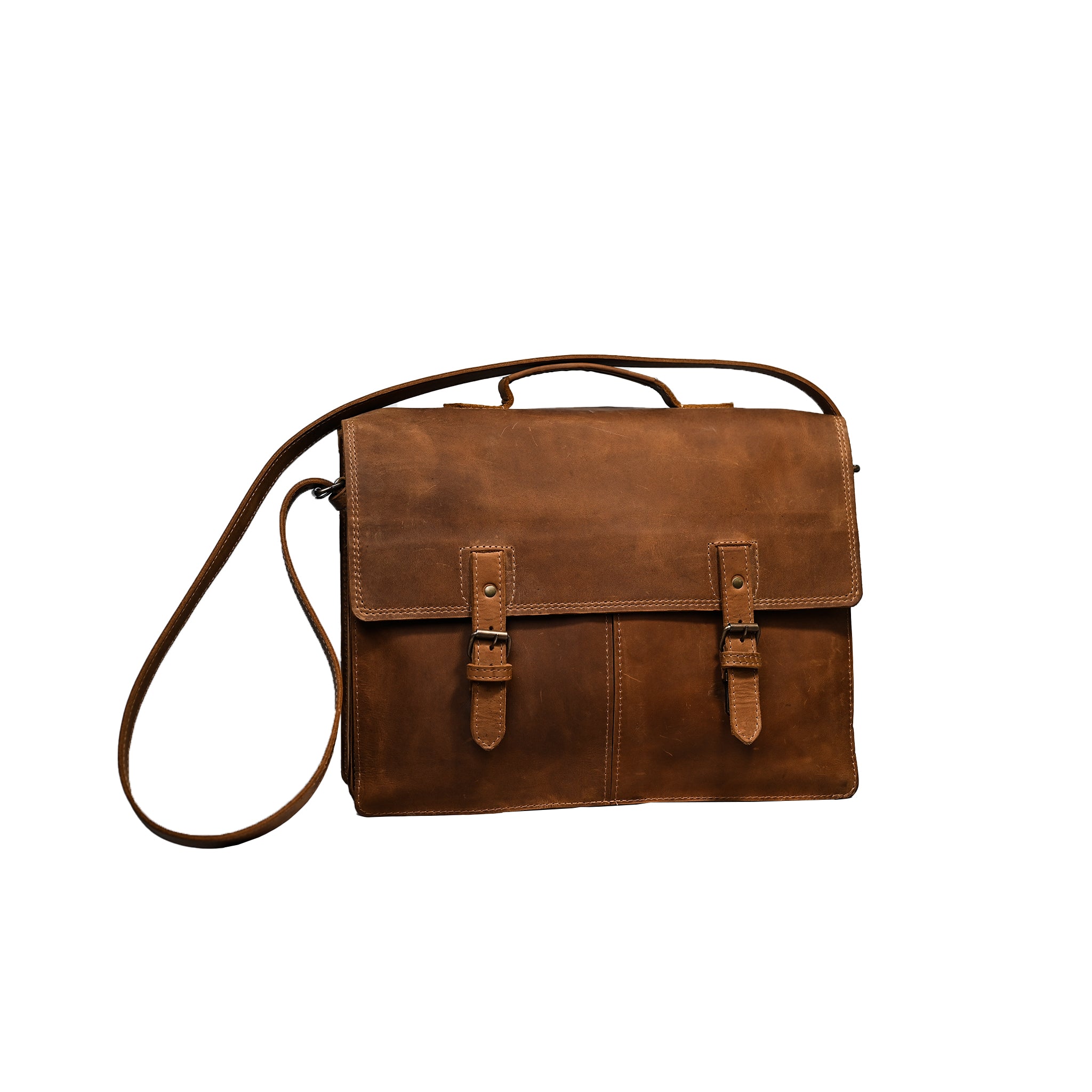
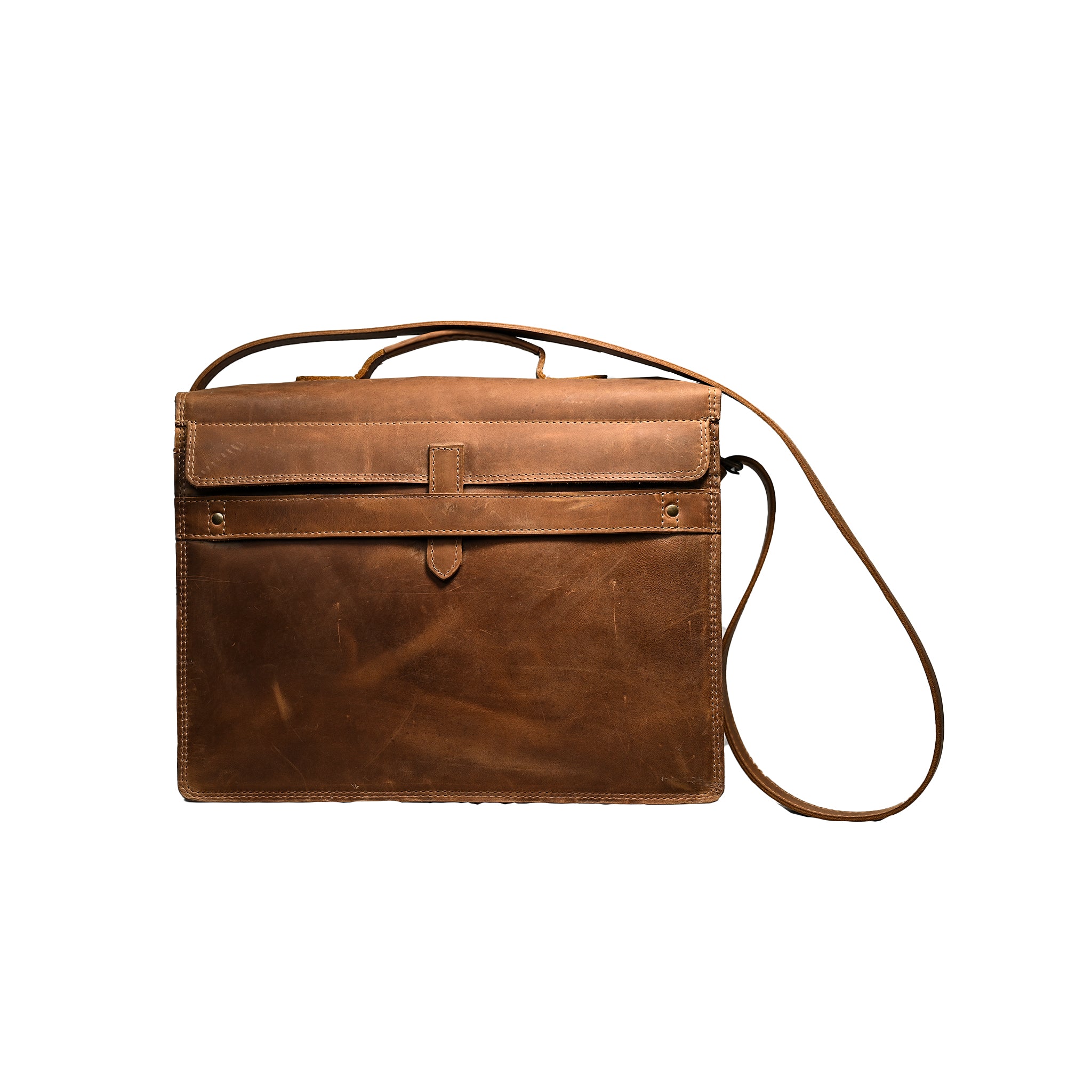
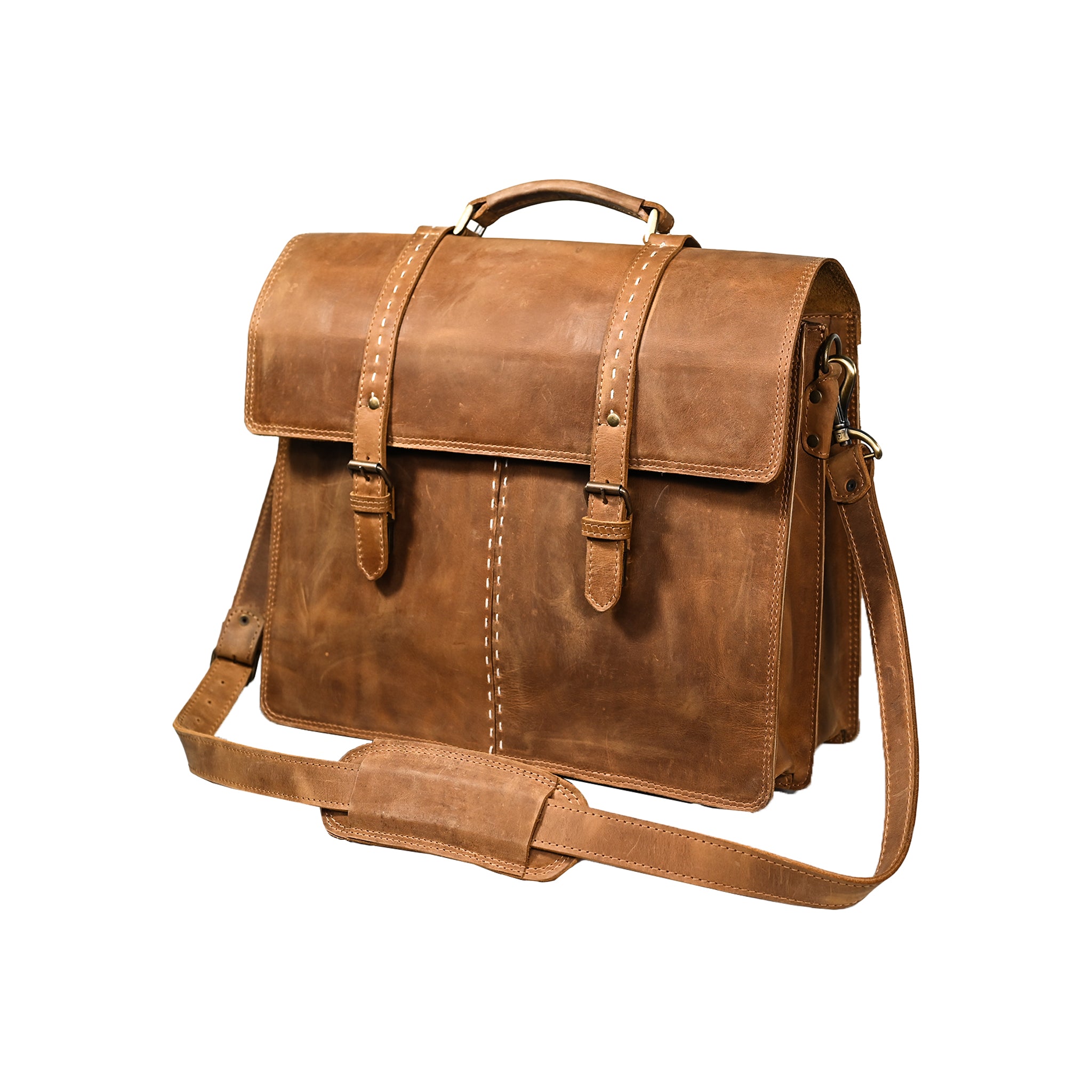
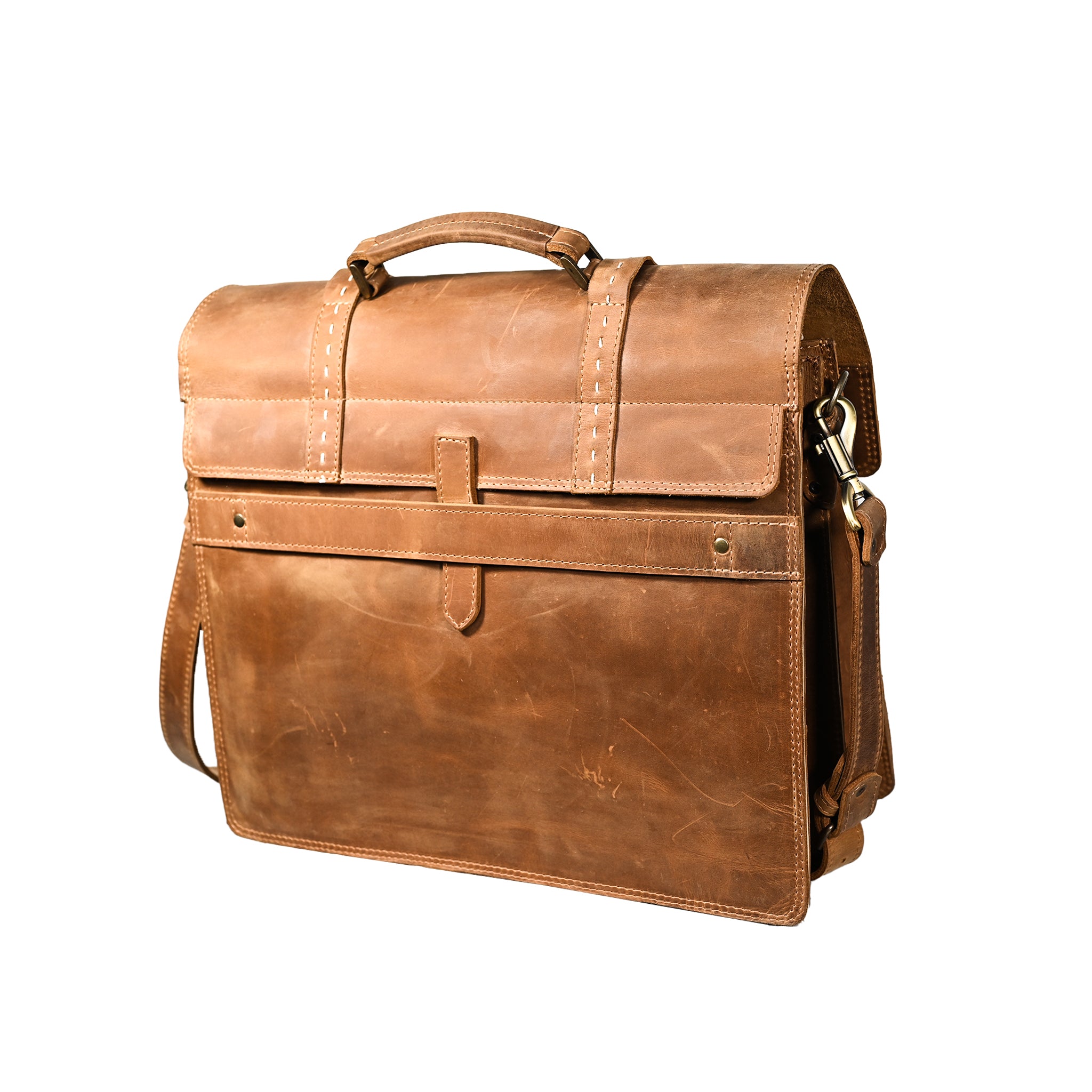


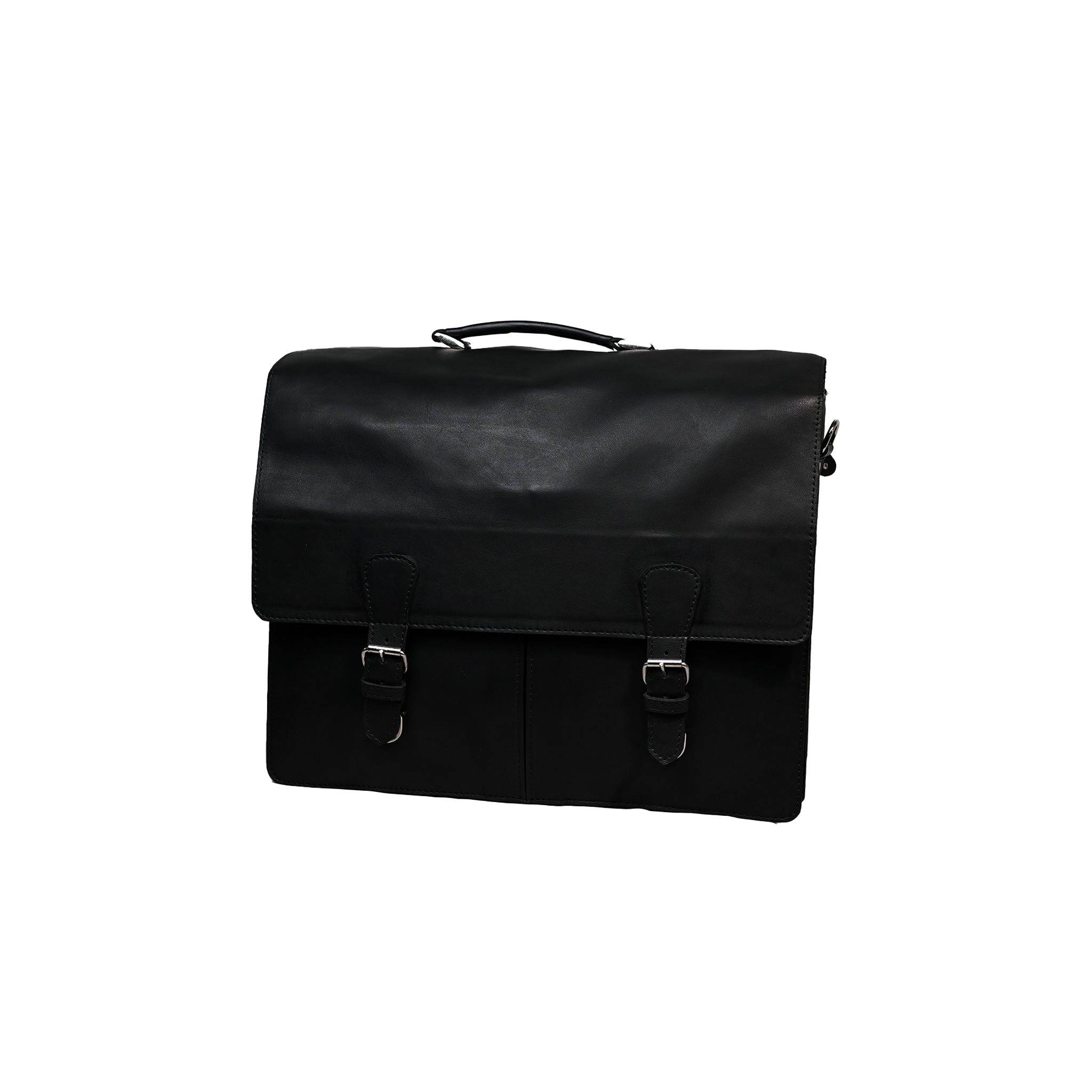
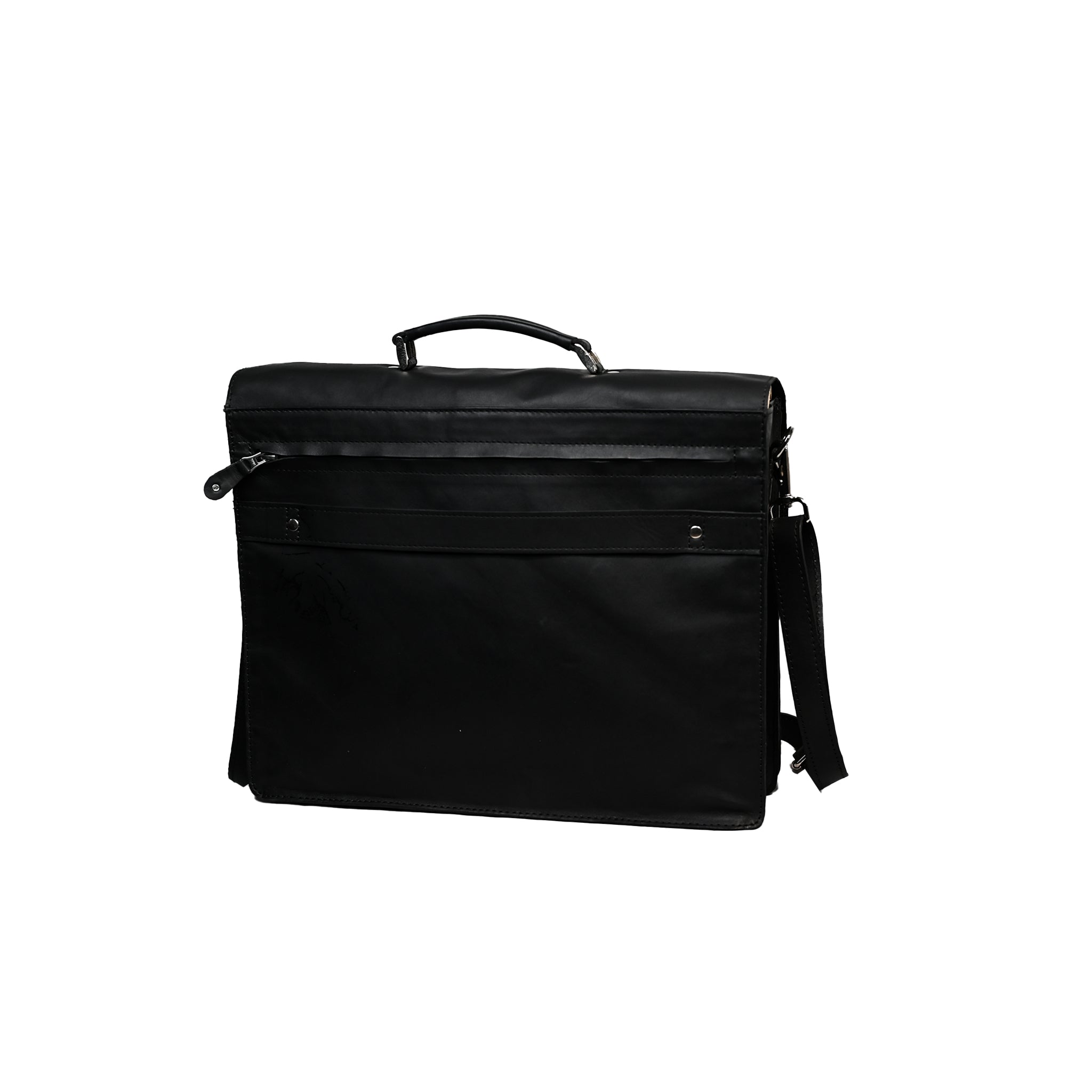

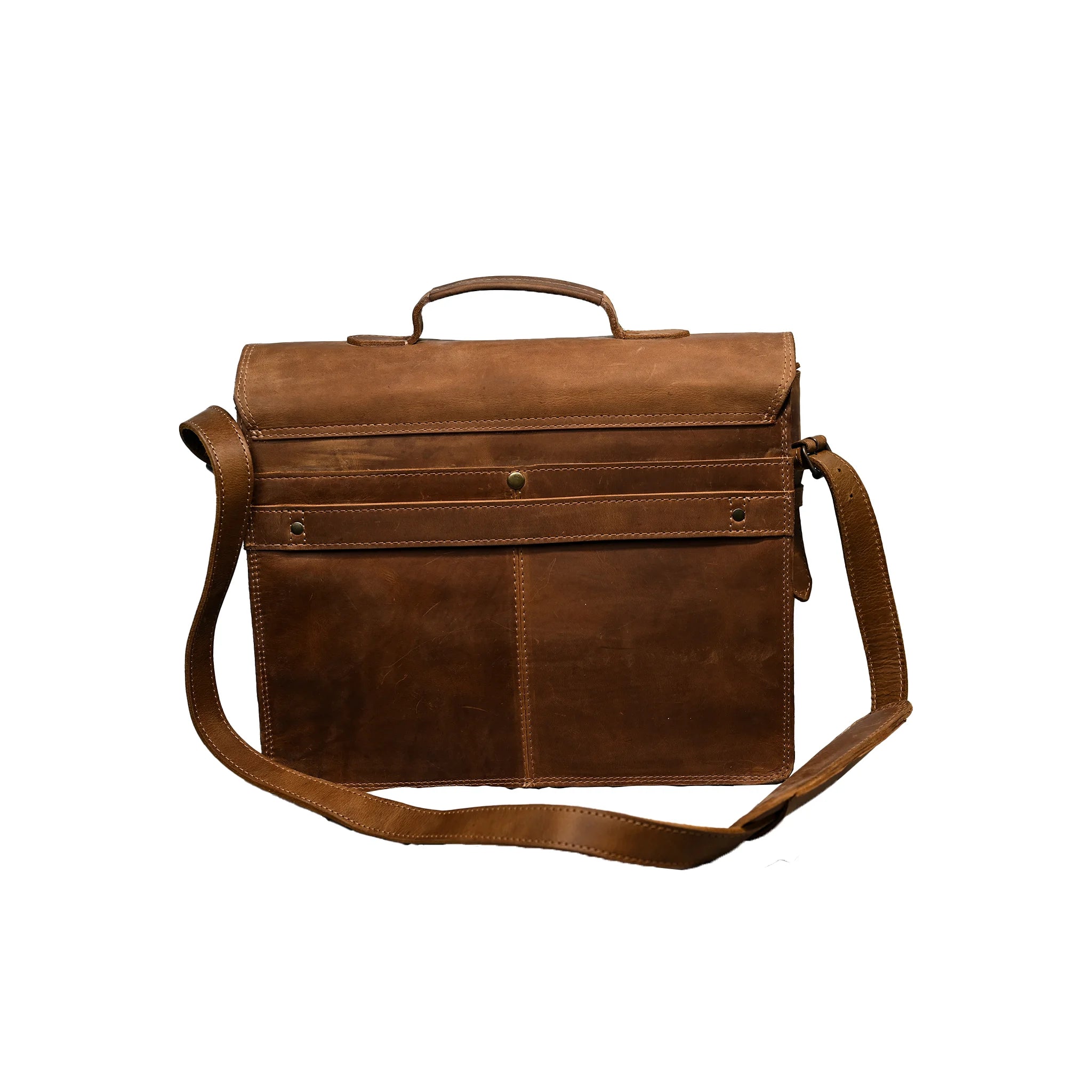

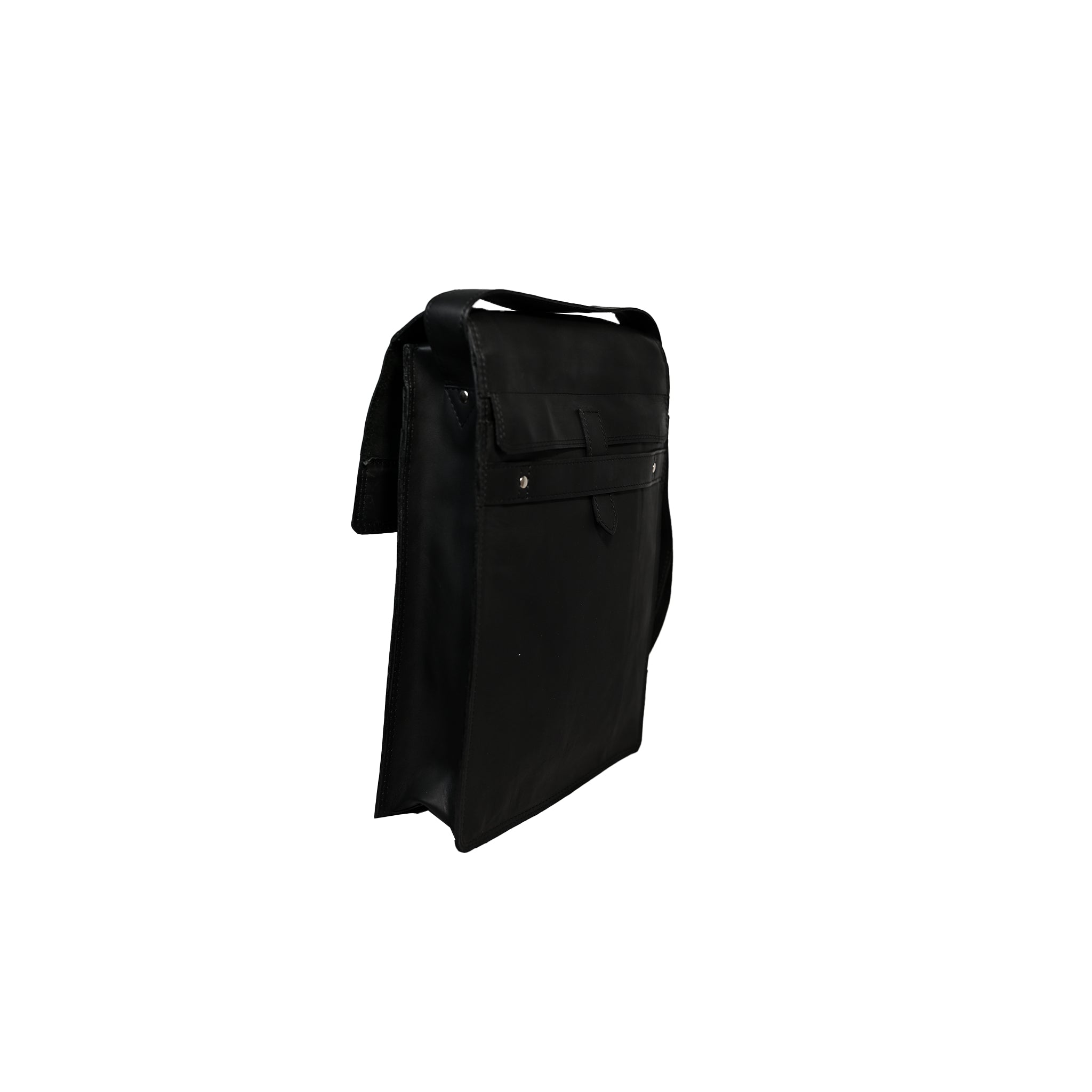


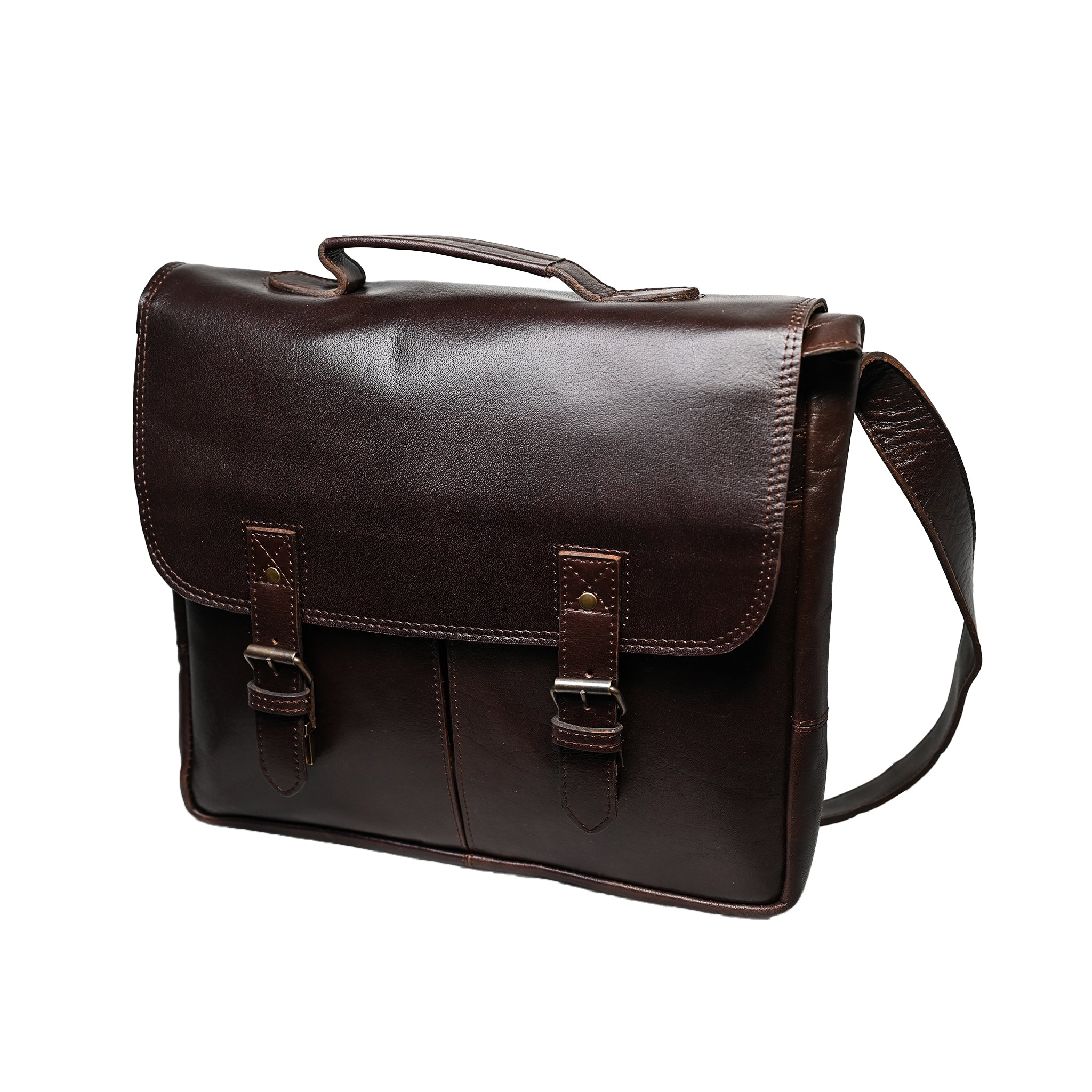
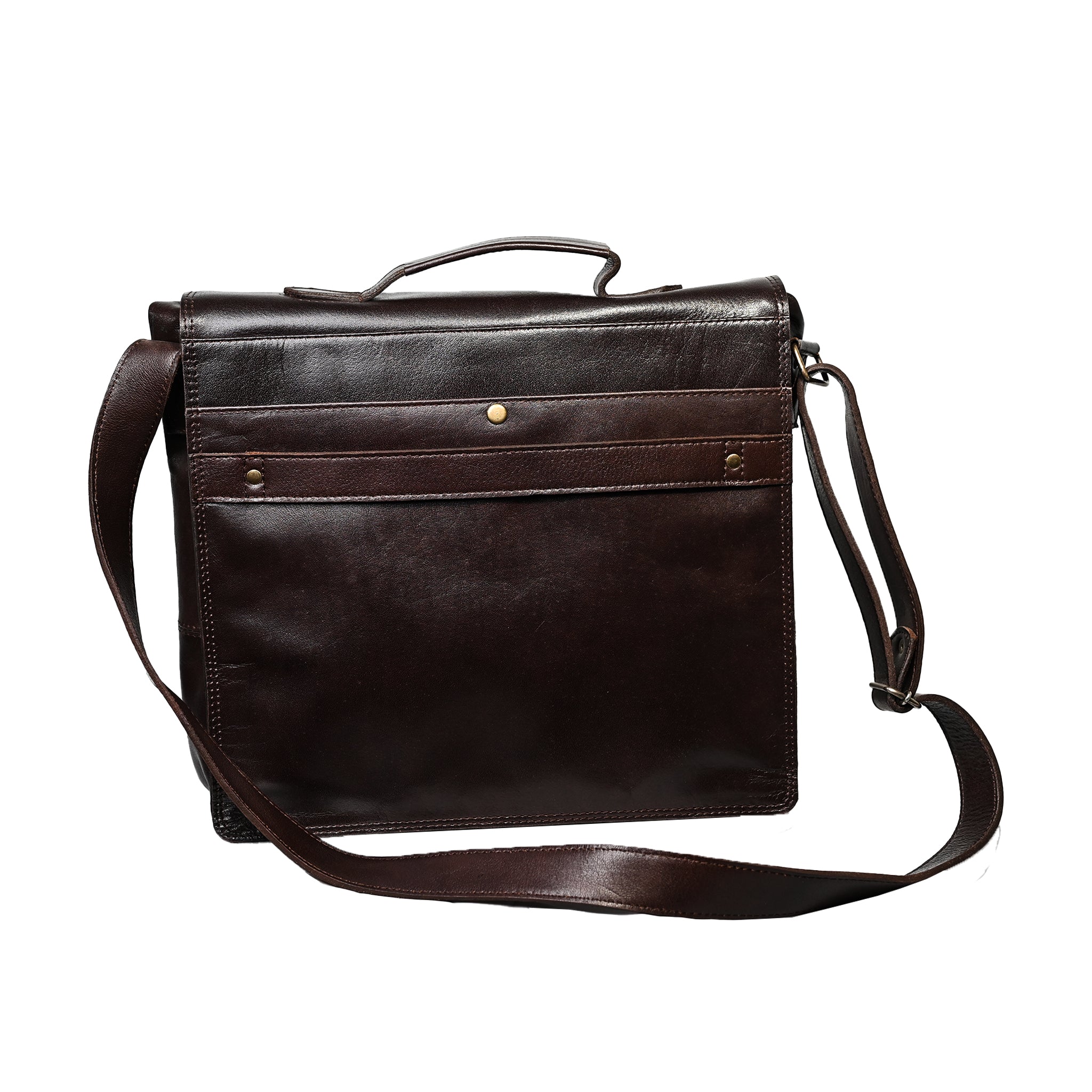
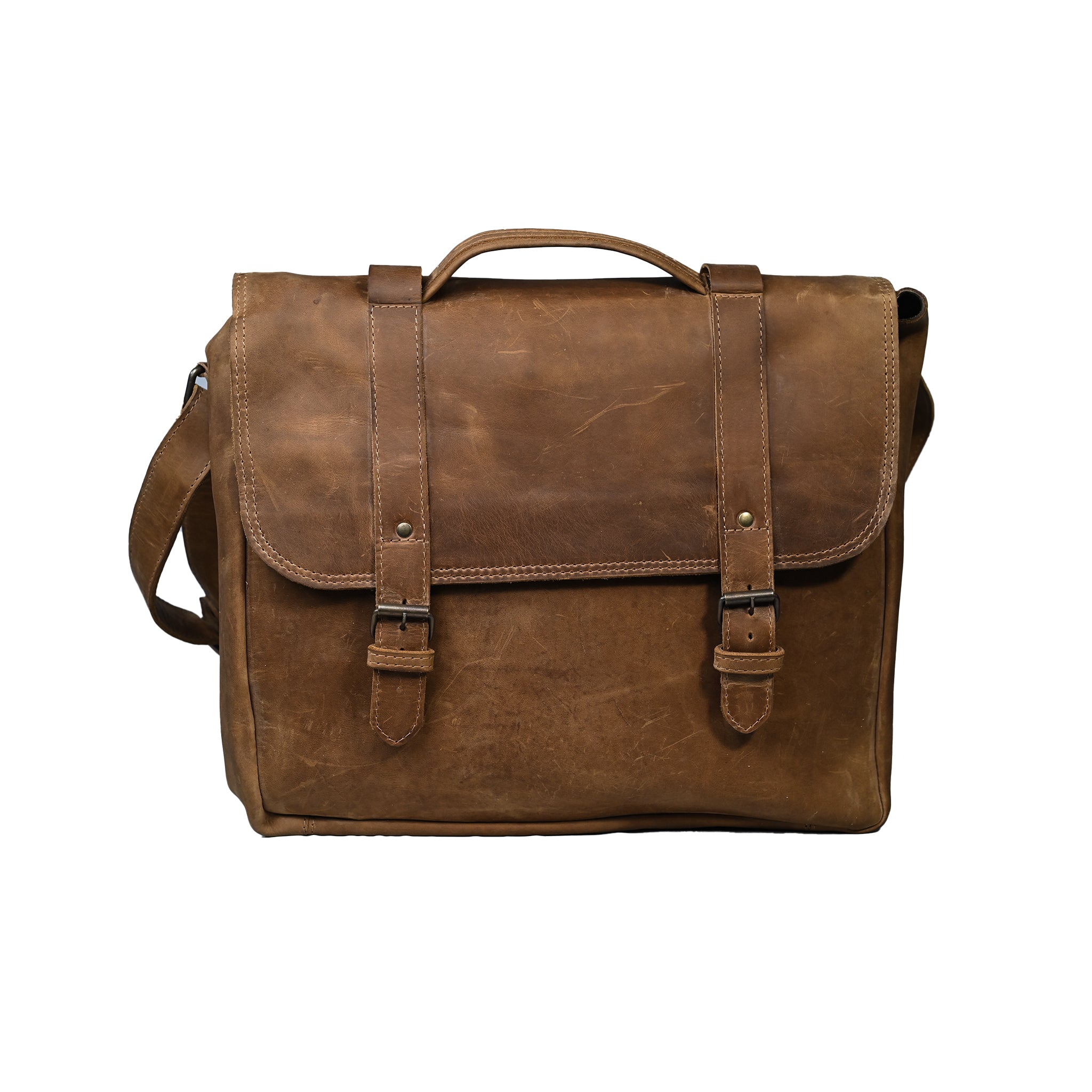
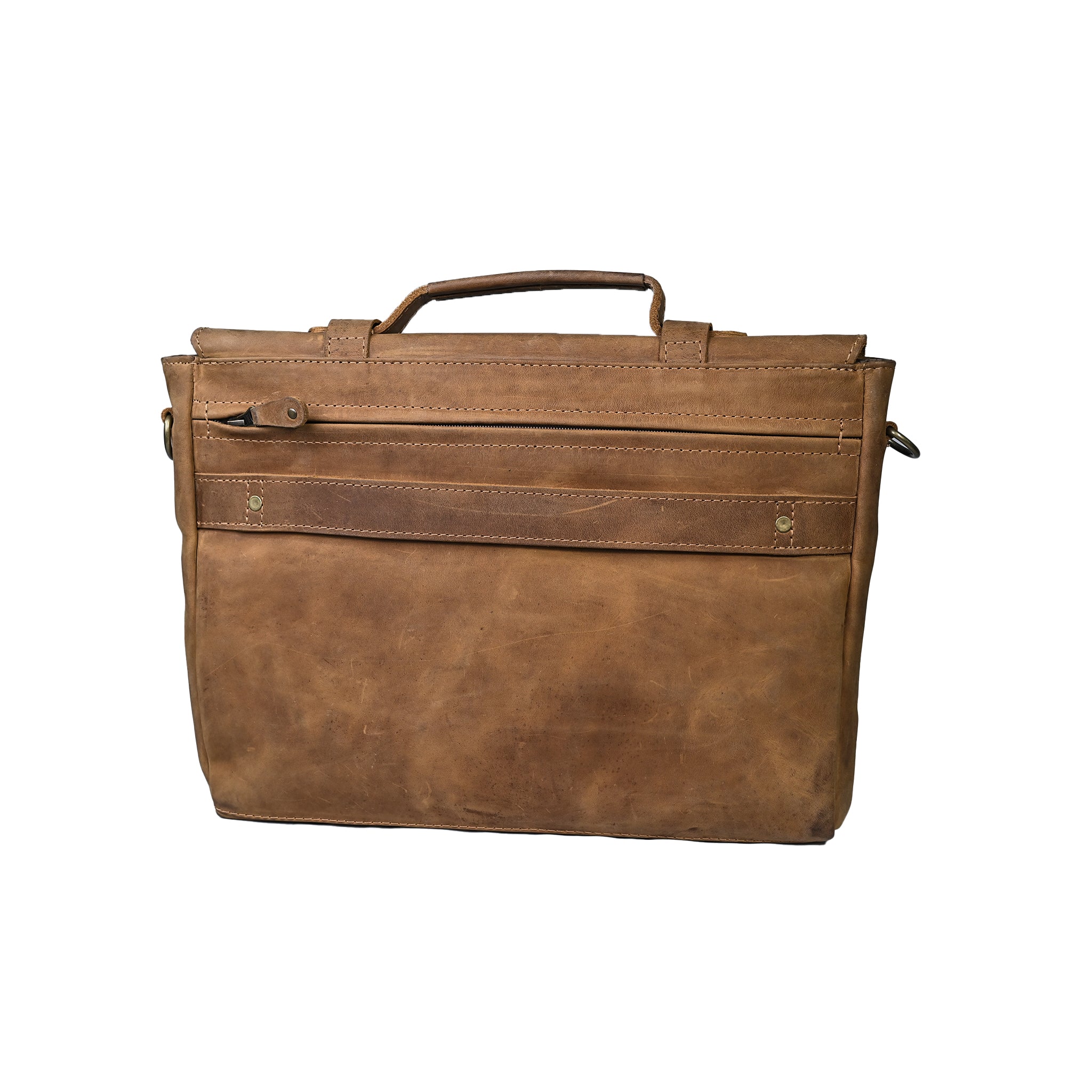


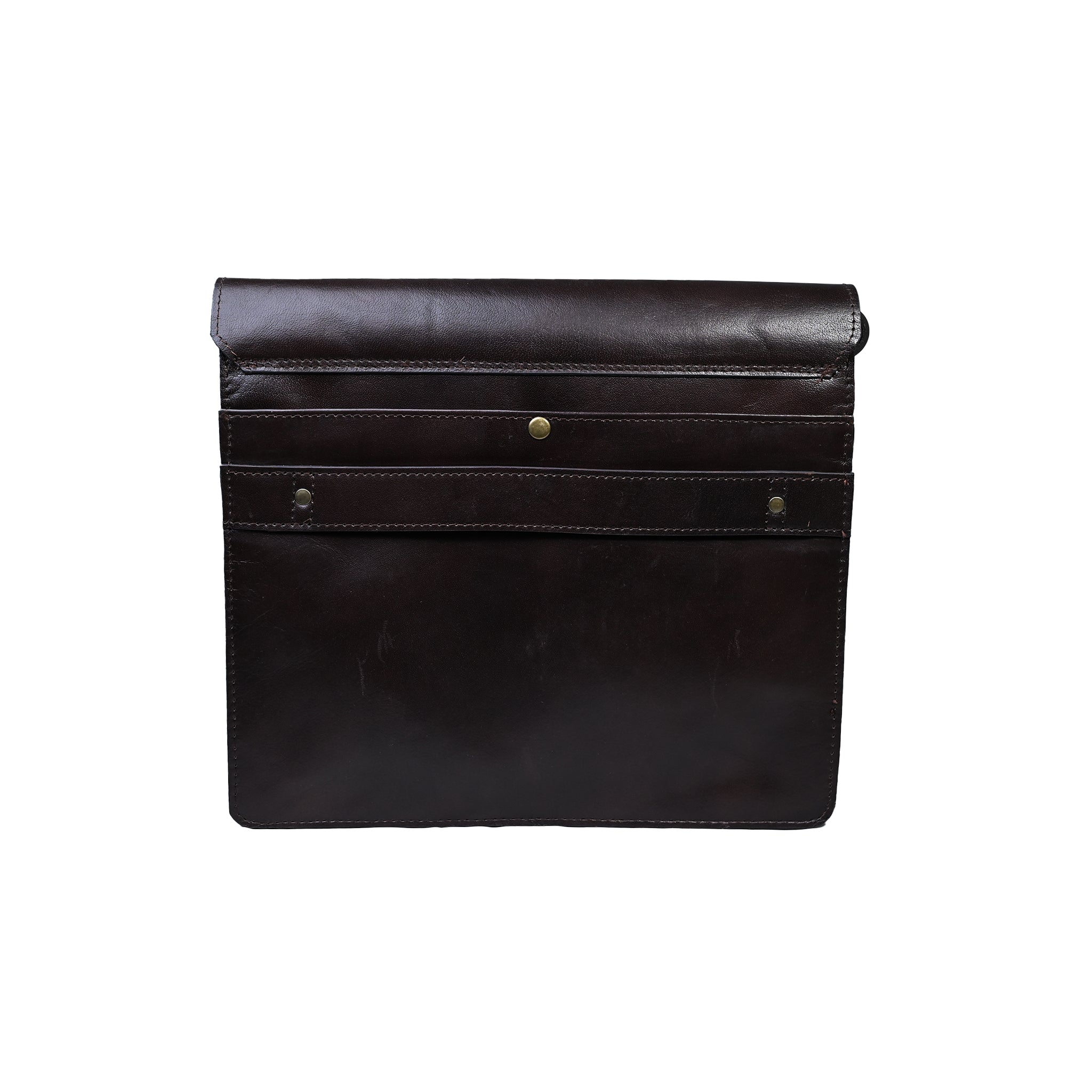
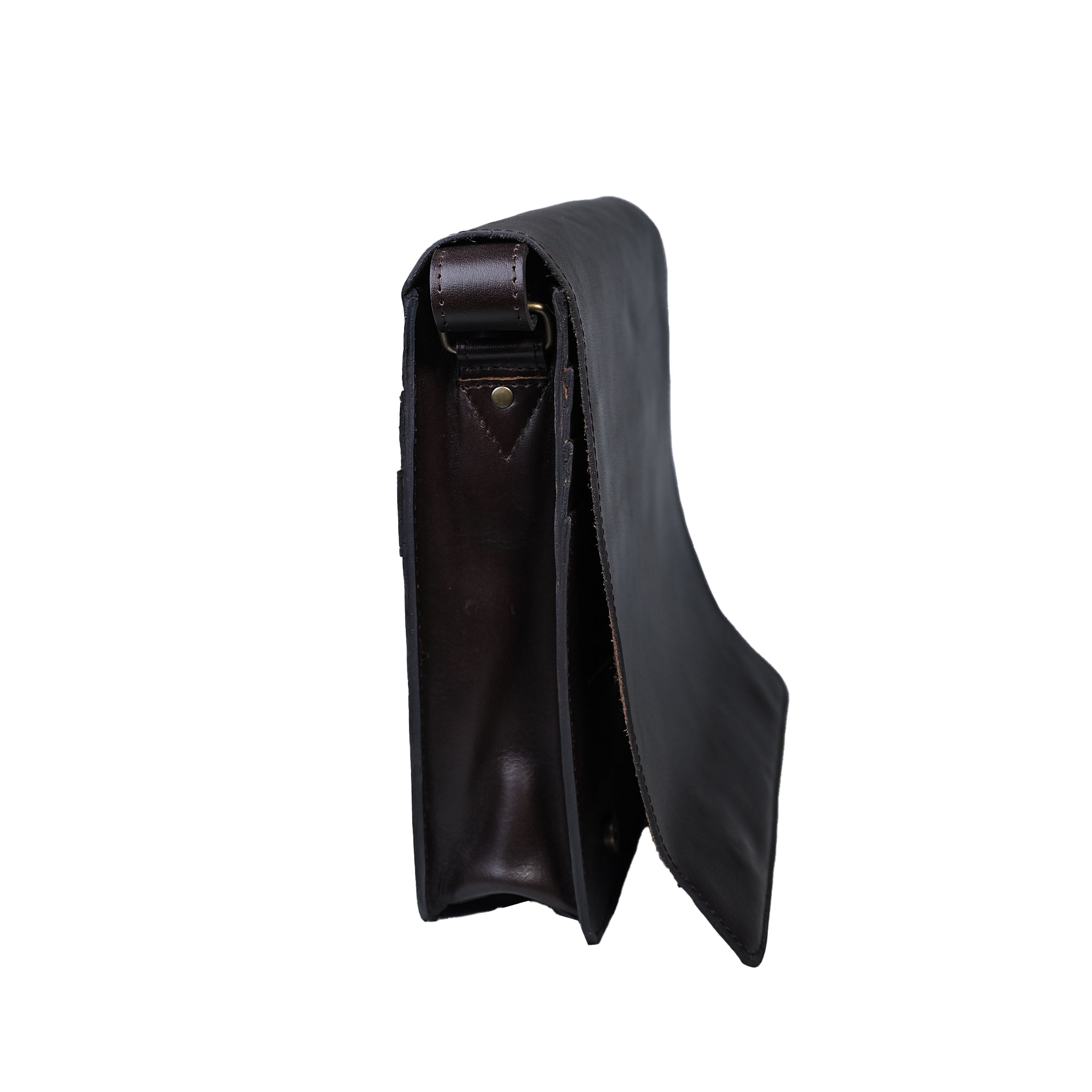
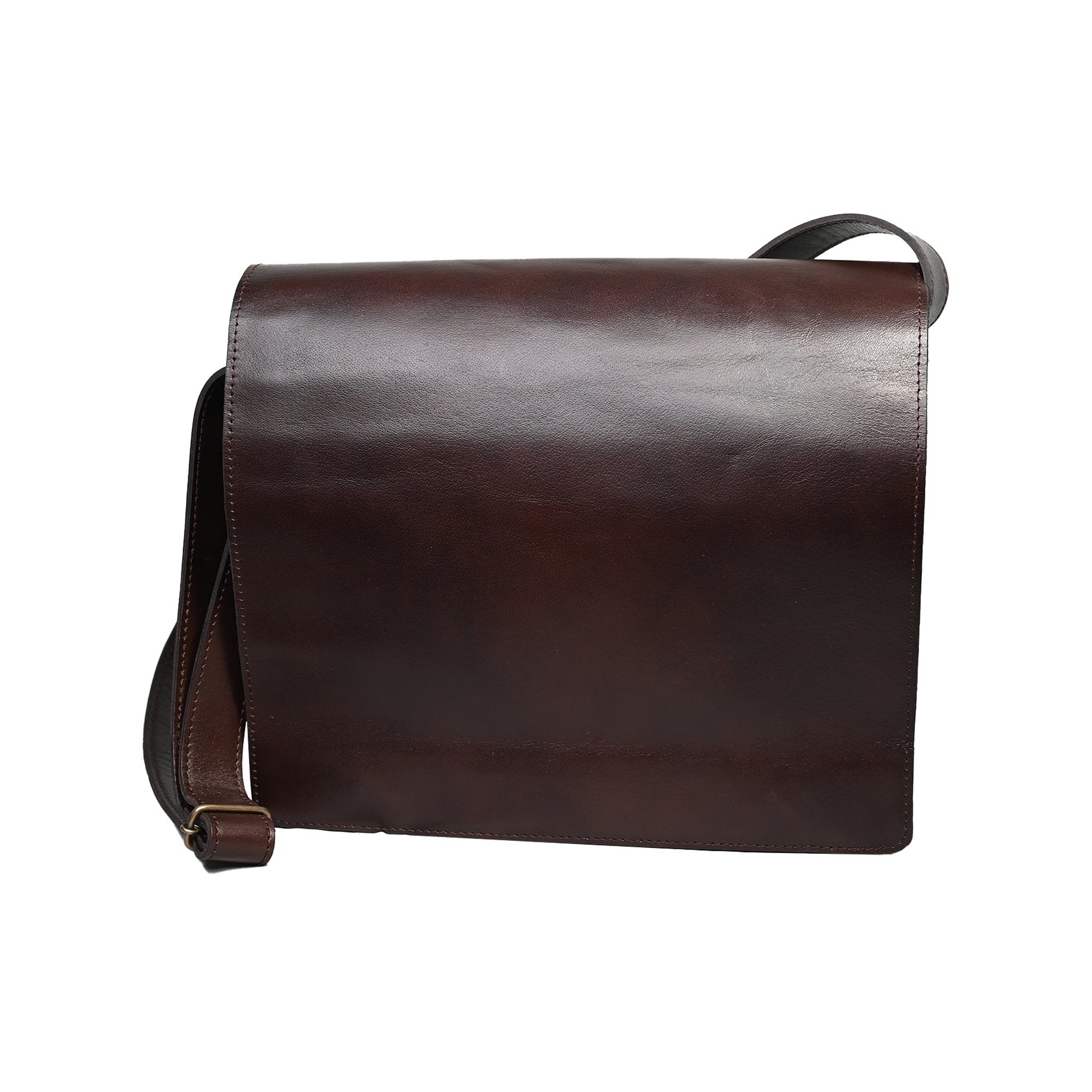



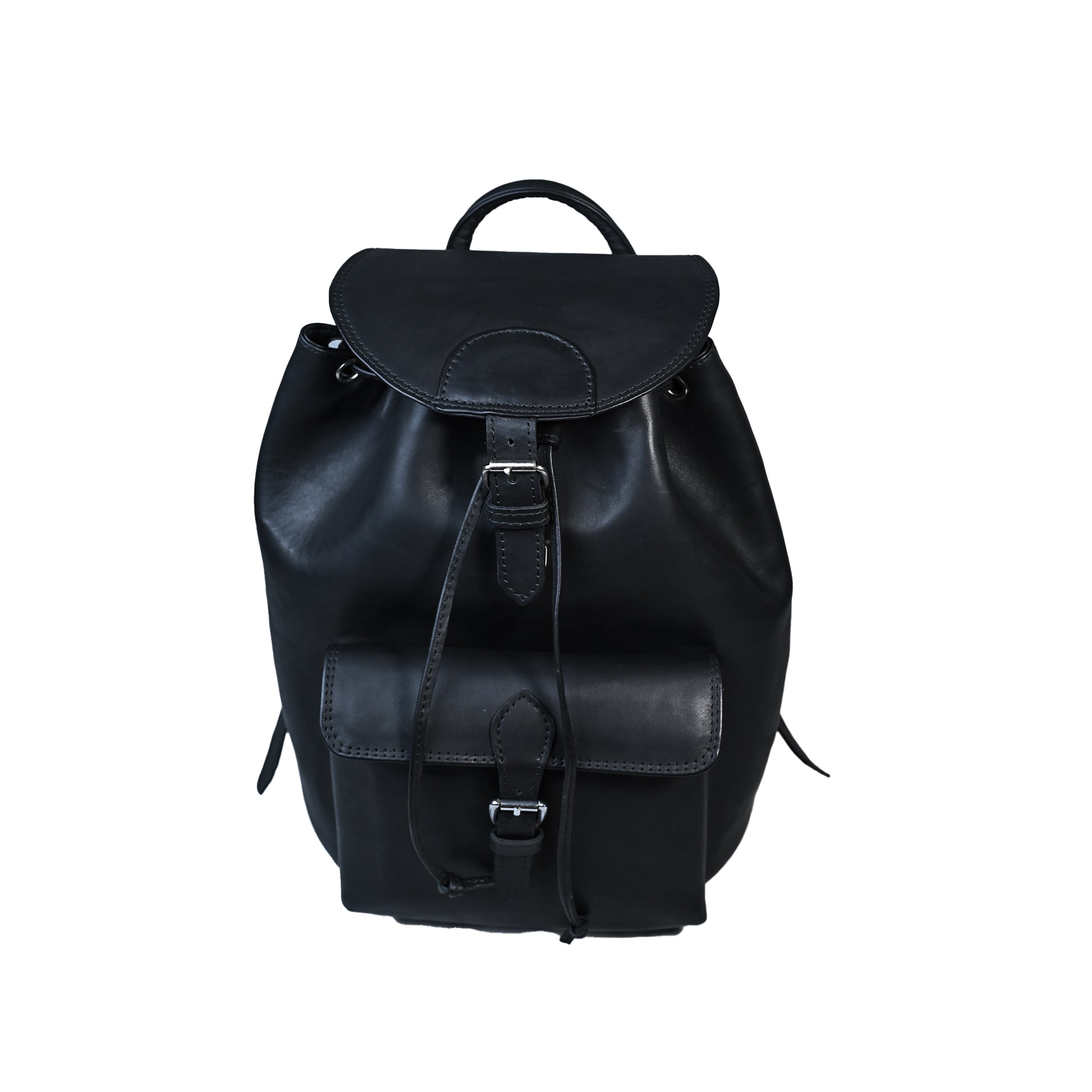
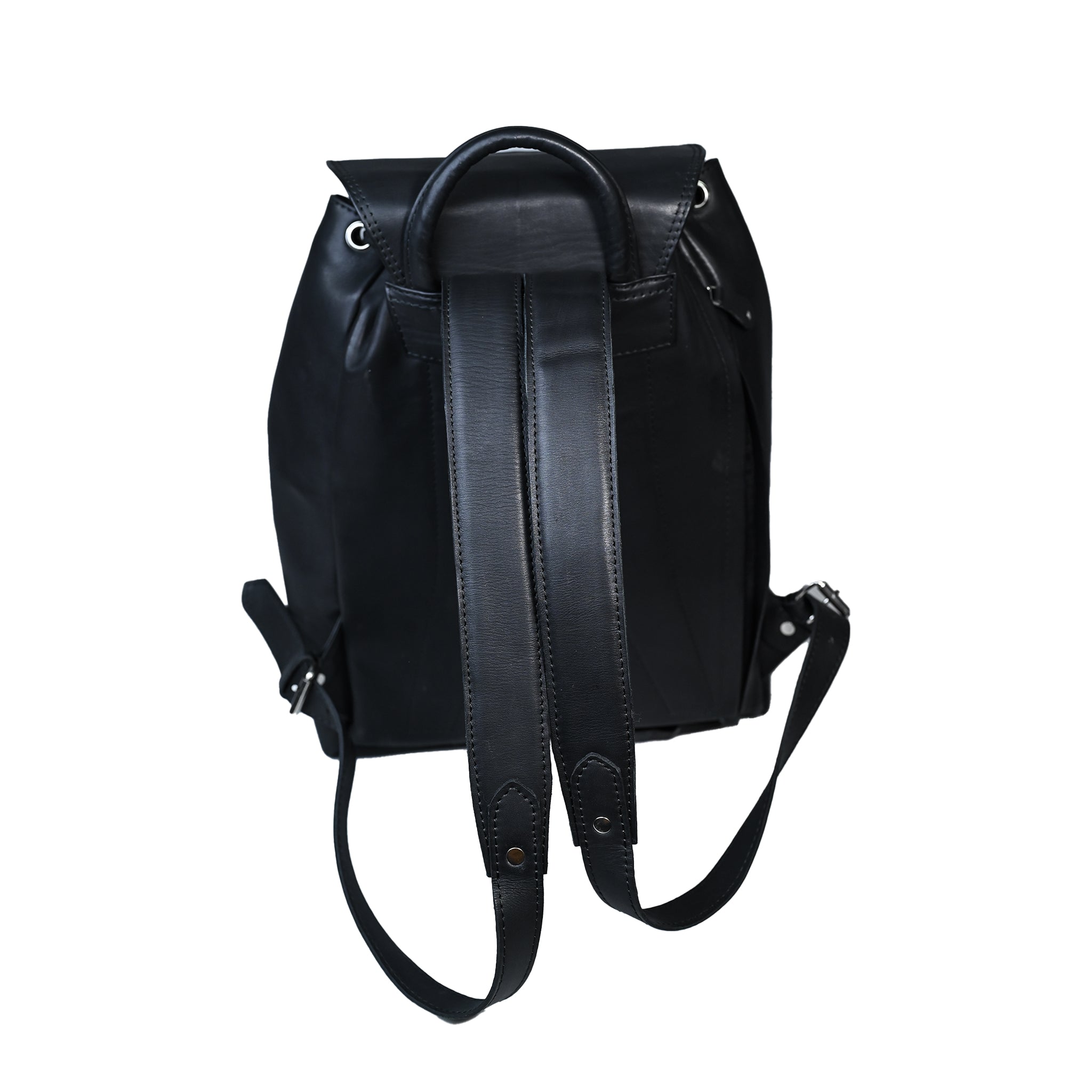
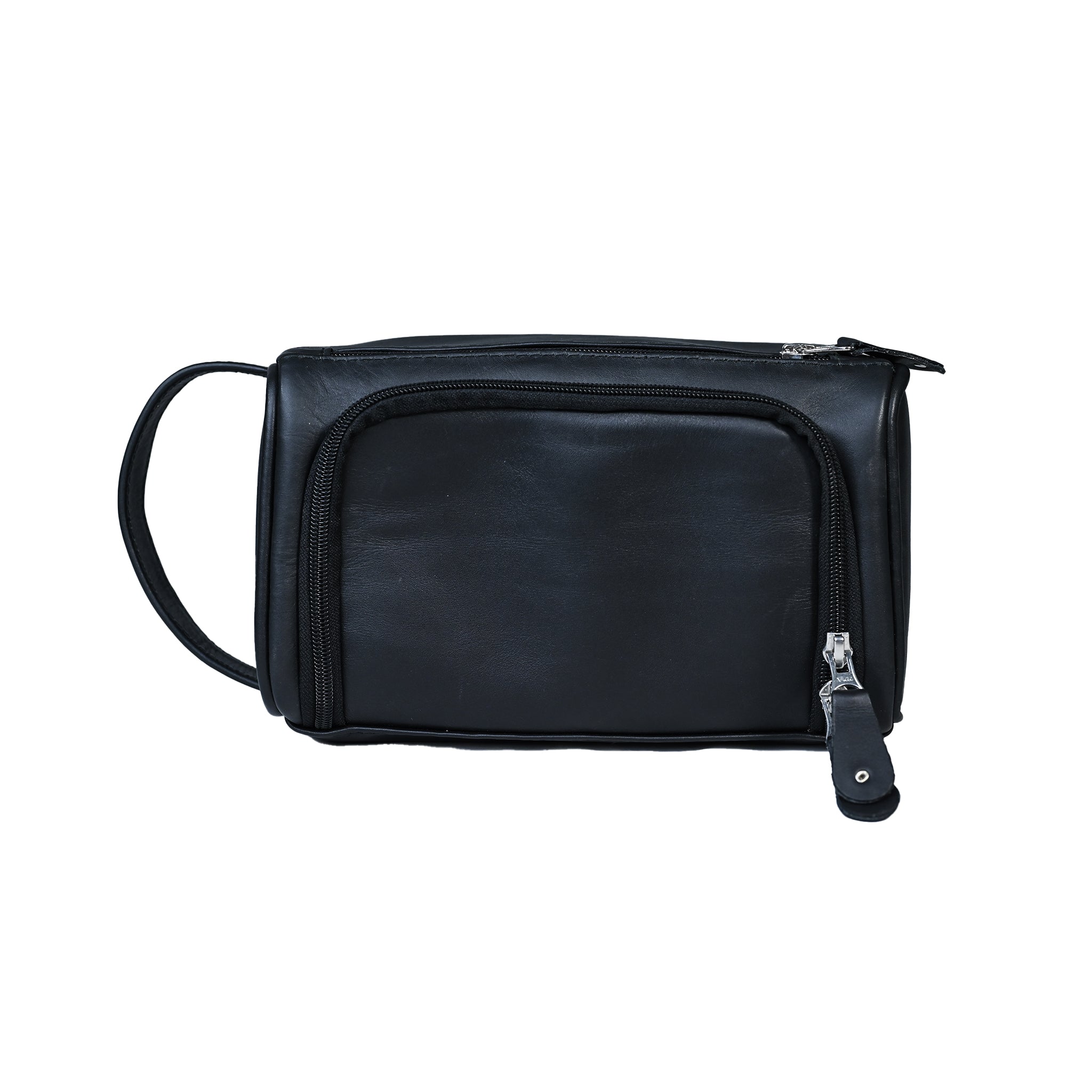
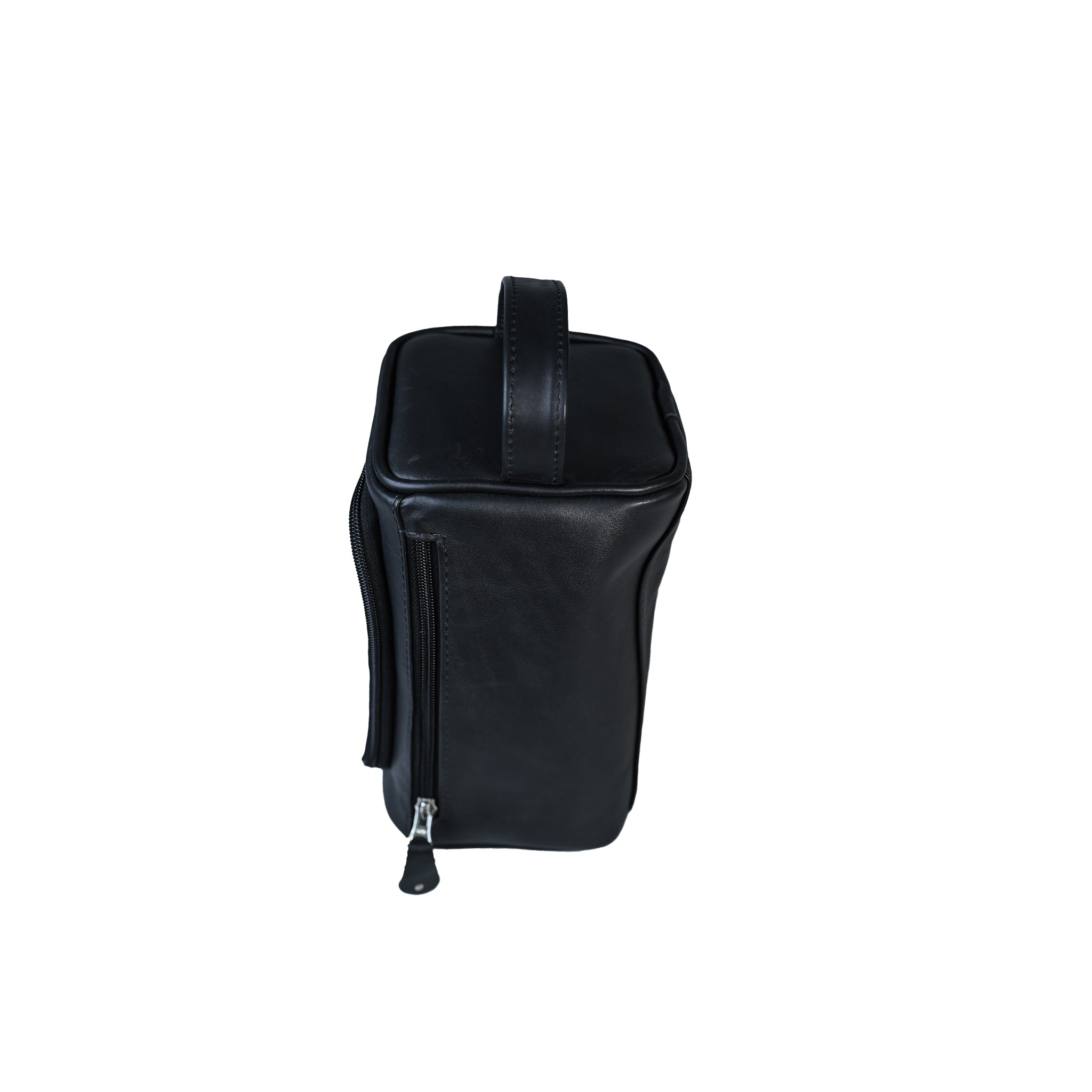
Subheading
Handmade Leather Bags
Handmade leather bags are cut, assembled and finished by a person rather than stamped out by machine. That means panels are cut to work with the grain of each hide, edges are burnished and sealed by hand, and stress points are reinforced individually. It is slower, and it is why the bag outlasts the machine-made one beside it.
A factory bag is designed to a price. Panels are die-cut from whatever part of the hide the pattern lands on, edges are painted rather than burnished, and the strap anchors are stitched the same way whether they will carry a phone or a laptop. It looks identical on a product photo. It fails at the seams inside two years.
When a bag, leather handmade at the bench, is put together, the maker sees each hide. Thicker sections go where the load sits — the base, the strap anchors, the handle. Thinner, more supple sections go where the bag needs to fold and move. That's a decision no cutting die makes.
What to look for, whoever you buy from:
- Edges that are burnished, not painted. A burnished edge is smooth and slightly darker; a painted one has a visible plastic-looking coat that cracks and peels.
- Stitching that runs straight and doubles back at stress points. Look at where the strap meets the body — that is where cheap bags fail first.
- Hardware with weight. Solid brass or steel buckles, and branded zips. Zippers are the single most common failure point in a bag.
- A lining that is stitched in, not glued. Torn linings are the second most common complaint in owner reviews, and glued linings are why.
What is full-grain leather, and why does it matter?
Full-grain leather is the outermost layer of the hide with the grain surface left intact. Nothing is sanded off to hide blemishes. Because that outer layer holds the tightest, strongest fibres in the hide, full grain leather bags resist tearing, hold their shape under load, and darken into a patina instead of wearing out.
The hide is split into layers, and the layer you get decides how long the bag lasts:
Full grain is the outermost layer with the grain left intact. It darkens, softens and develops a patina rather than wearing out, and with care it lasts ten to twenty years or more.
Top grain is that same outer layer sanded back and refinished to hide blemishes. It holds its finish well but never develops much character, and it typically gives five to ten years.
"Genuine leather" comes from the lower splits of the hide, usually corrected and coated. The coating is what fails — it cracks and flakes — and two to five years is realistic.
Bonded leather is ground-up scrap glued to a backing. It peels and delaminates, often inside one to three years.
PU or "vegan" leather is polyurethane plastic on a fabric base. It cracks, then flakes away entirely, and rarely survives past three years.
A bag of leather taken from the top of the hide costs more because usable full-grain hide is a small fraction of what a tannery produces. That price difference is the whole product. Everything else — the design, the hardware, the stitching — is built on top of the decision about which layer of the hide you started with.
A bag of leather taken from the top of the hide costs more because usable full-grain hide is a small fraction of what a tannery produces. That price difference is the whole product. Everything else — the design, the hardware, the stitching — is built on top of the decision about which layer of the hide you started with.
Is "genuine leather" the same as real leather?
Not quite, and the difference costs people money. When most shoppers search for real leather bags they mean "not plastic" — hide rather than polyurethane. But in the leather trade the printed words on a product tag mean something narrower and much less flattering, and the two meanings are constantly confused.
Here is the honest version, because there is a real disagreement about it. Some in the industry treat "genuine leather" as simply a legal label meaning the material came from an animal rather than a factory — nothing more. Others treat it as an informal grade, sitting below full grain and top grain, made from the lower splits of the hide after the good layers have been taken off. Both are true in practice, which is exactly the problem. The phrase is technically accurate and tells you almost nothing.
So if a product page calls a bag genuine leather and stops there, that phrase alone tells you only that it isn't plastic. It does not tell you which layer of the hide you're getting, and the layer is what determines whether the bag lasts three years or twenty. A seller who knows their leather is full grain says "full grain," because it's the better claim. A seller who doesn't say it usually has a reason.
How to check a bag yourself, in a shop or when it arrives:
- Look at the cut edge. Real hide shows a fibrous, slightly fuzzy cross-section. PU shows a clean fabric backing under a smooth skin.
- Look at the pores. Full grain has an irregular, non-repeating grain. Embossed and corrected leathers repeat their pattern.
- Press it with your thumb. Full grain creases and wrinkles around the pressure, then relaxes. Coated and synthetic surfaces stay flat or crease sharply and stay creased.
- Smell it. There is no substitute for it, and no coating fully hides it.
- Warm it in your hand. Hide warms and stays warm. Plastic warms and then feels clammy.
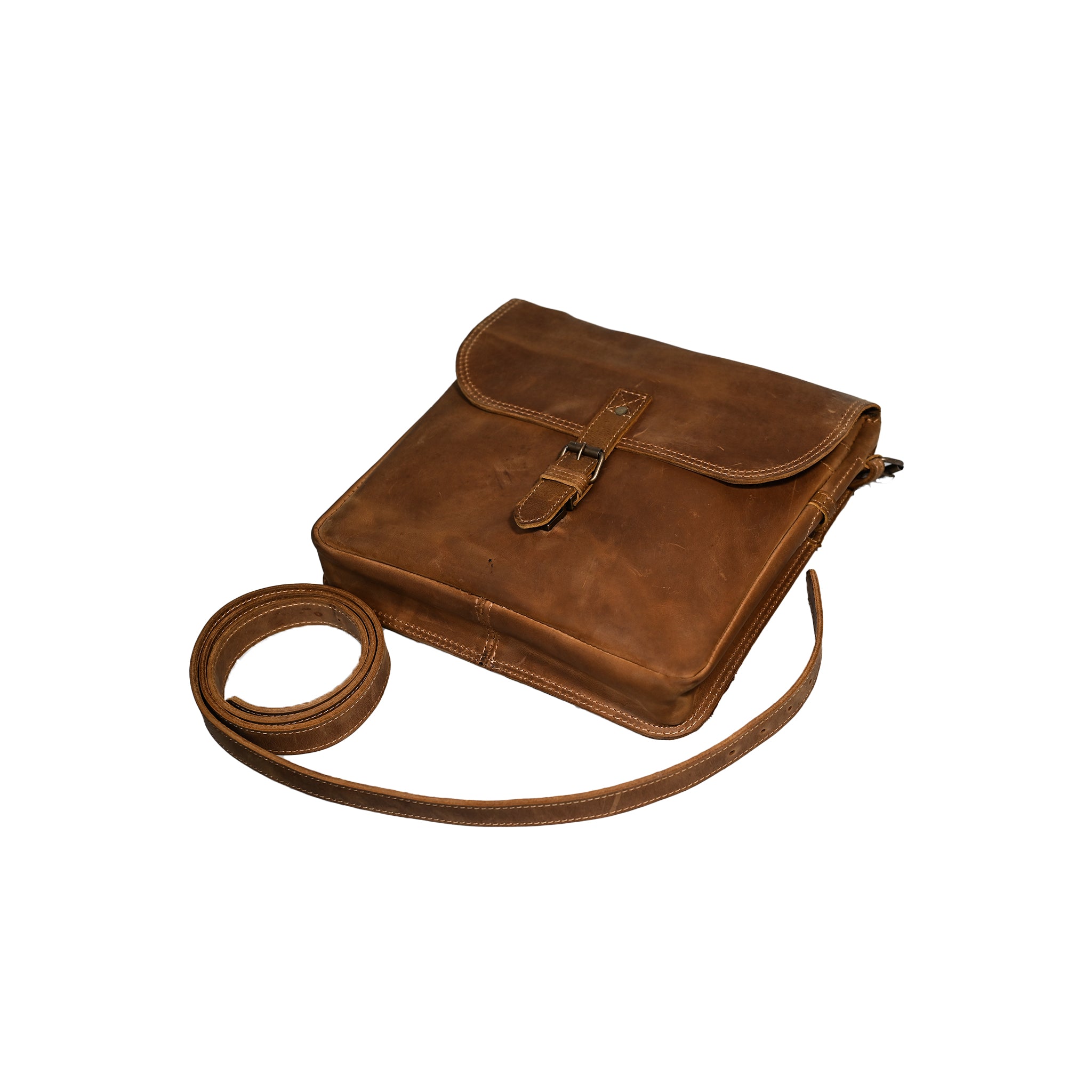
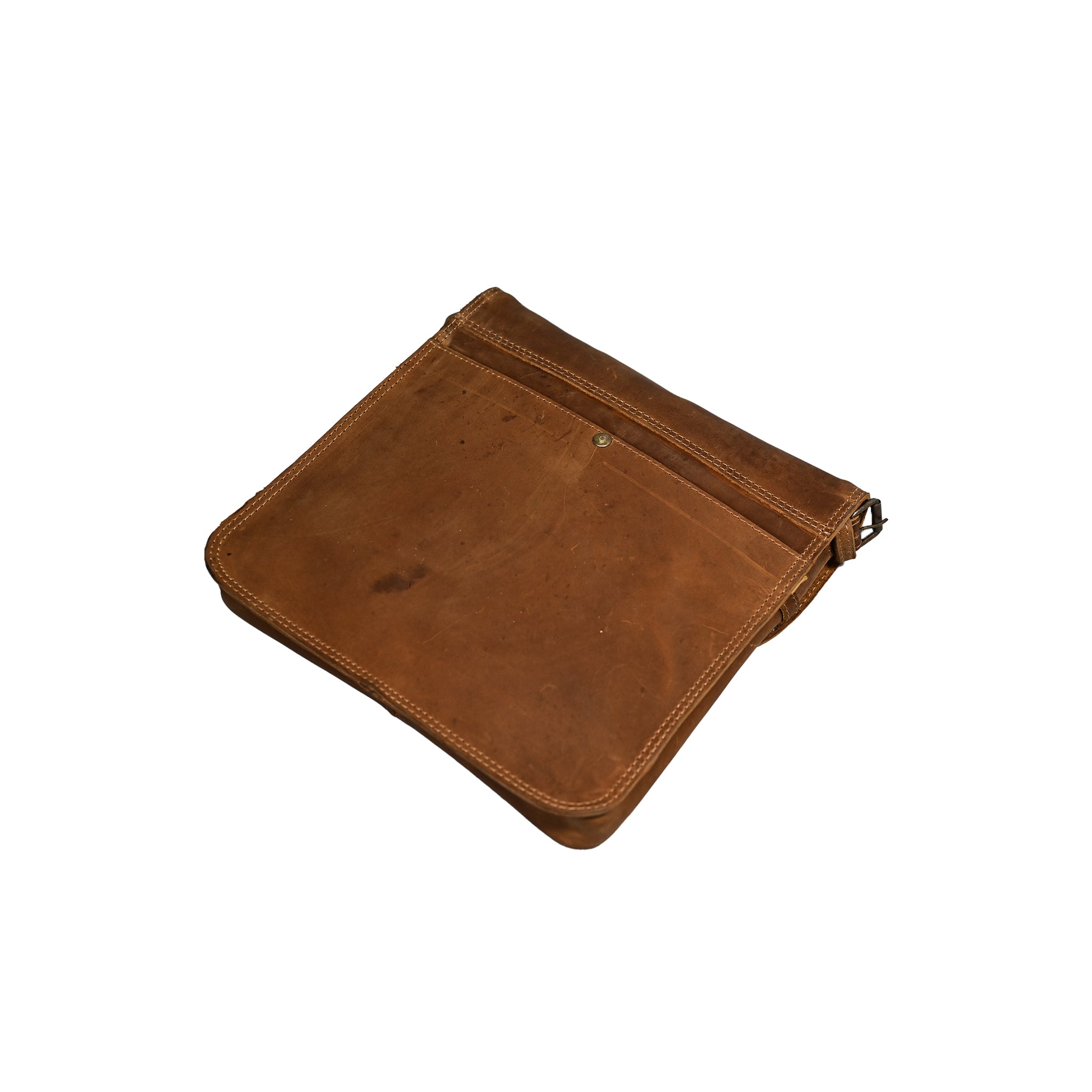
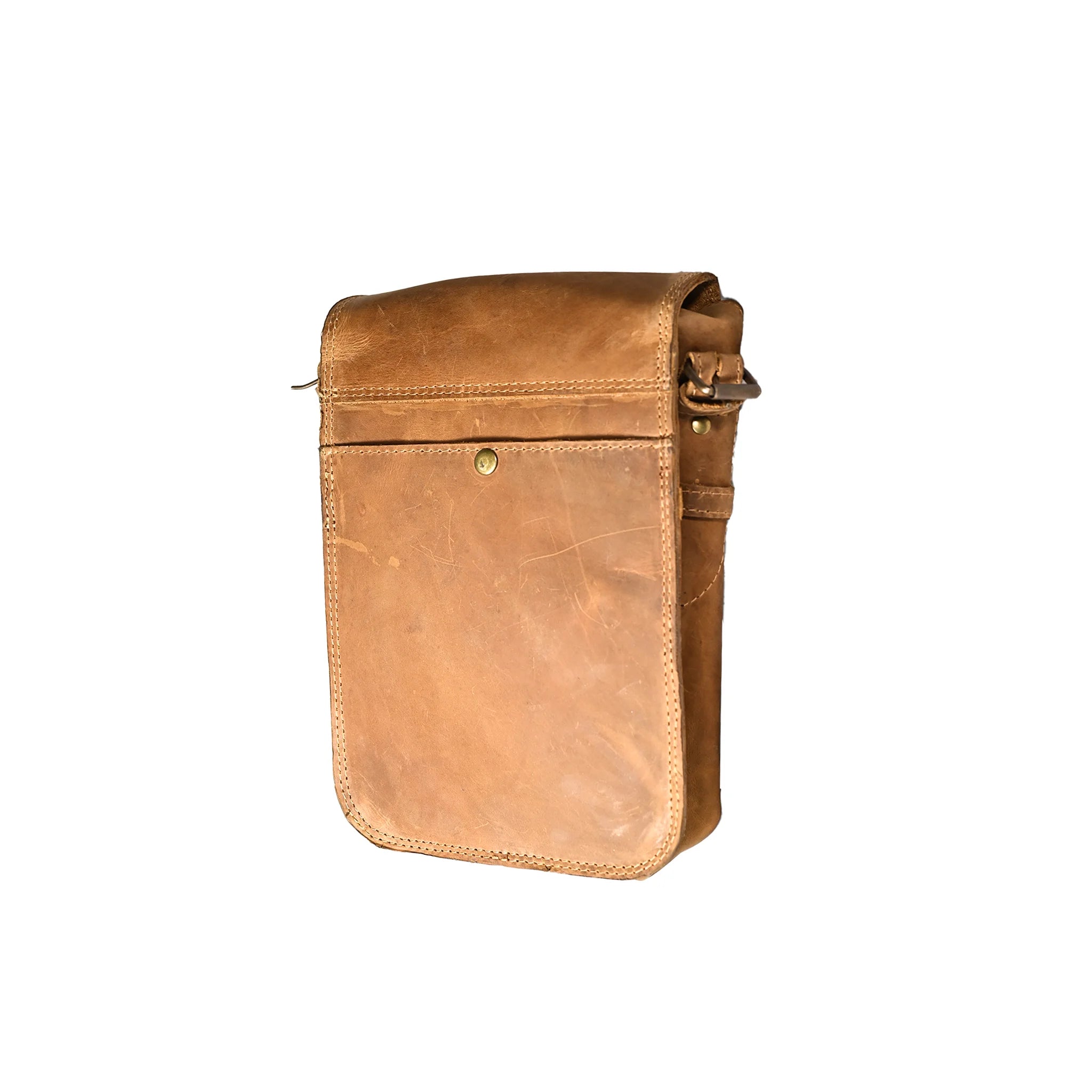
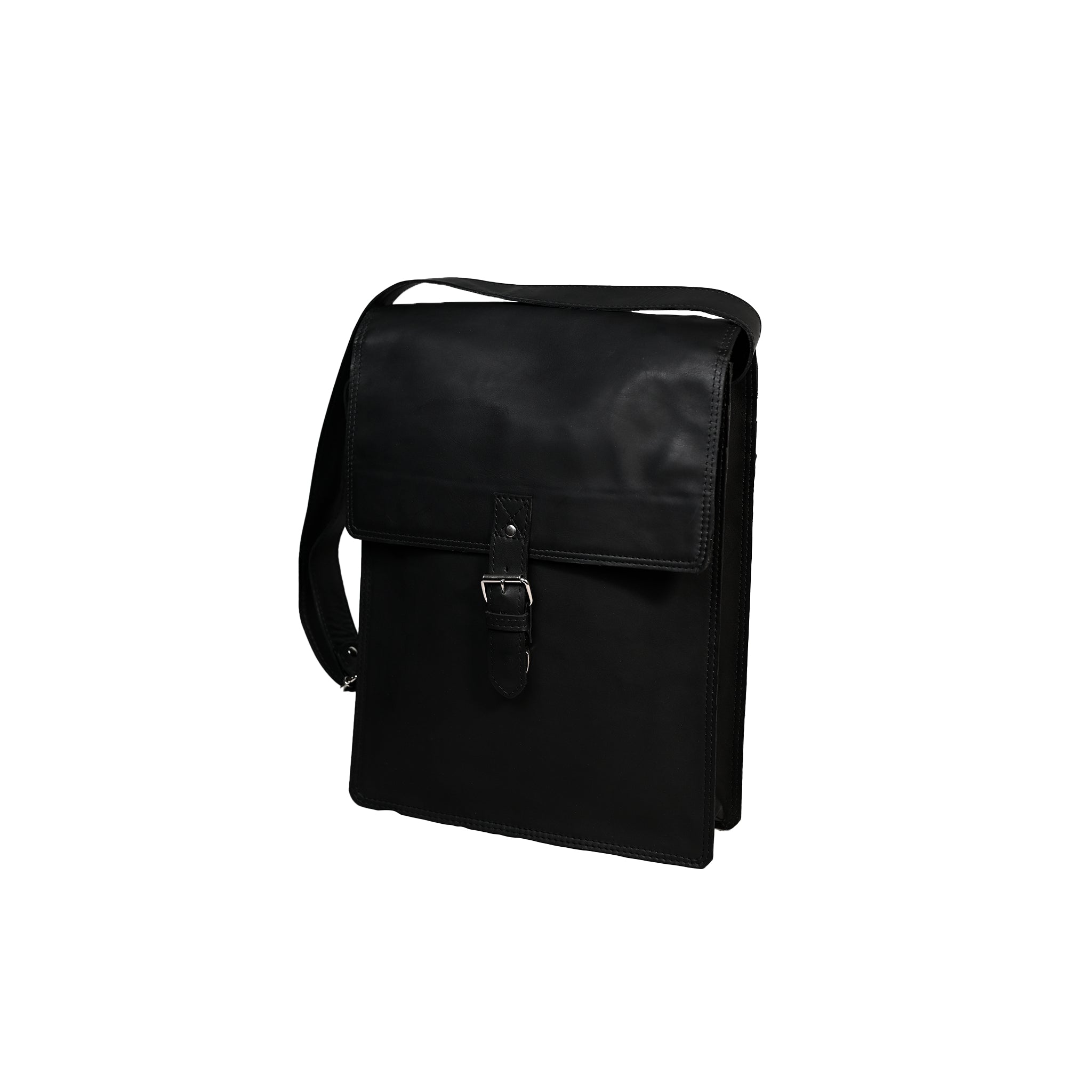
Every bag on this page is full-grain cowhide or Crazy Horse buffalo leather. We say which one on every product page, because the grade is the specification that matters.
What is Crazy Horse leather?
Crazy Horse leather is full-grain hide finished with a heavy wax rather than a surface coating. The wax sits in the grain, so when the surface is scratched the mark rubs out with a thumb and the leather takes on a mottled, worn-in look almost immediately. It is the most forgiving finish for a bag that gets thrown into a car and onto floors.
It is the finish on our buffalo backpacks and several of the messenger bags, and it behaves differently from smooth cowhide in two ways worth knowing before you buy. It arrives already looking a little lived-in rather than pristine, and the colour shifts unevenly as it wears — lighter at the corners and edges, deeper in the flat panels. If you want a bag that looks the same in year five as on day one, choose smooth cowhide. If you want one that looks better because it's been used, choose Crazy Horse.
How long should a durable leather bag last?
A durable leather bag in full-grain hide, conditioned twice a year, should last ten to twenty years — and the failure, when it comes, is usually a zipper or a lining rather than the leather itself. Both are repairable. That is the actual argument for buying one: not that it never wears, but that wear is fixable rather than terminal.
The arithmetic is worth doing before you decide the price is high. A $289 bag carried for fifteen years costs about $19 a year. Three $110 bags replaced every two and a half years over the same period costs roughly $44 a year — and leaves six bags in landfill. A bag of leather at this weight is the cheaper option on any timeline longer than about four years.
What determines where in that ten-to-twenty-year range a bag lands:
- Leather thickness. Under about 1.4mm and the bag will stretch out of shape under a laptop.
- Stitch density and thread. Bonded nylon or polyester thread, tight and even, doubled back at the strap anchors.
- Hardware quality. Solid brass or steel, and a branded zip. A failed zipper ends a bag's usable life faster than any other single part.
- Lining construction. Stitched-in cotton or canvas, not glued fabric.
- How you treat it. Conditioning twice a year roughly doubles the life of the leather. It takes ten minutes.
Buying leather bags in Canada - what you'll actually pay
The price you see is the price you pay. Every bag ships from within Canada, priced in Canadian dollars, so there is no import duty, no customs clearance and no courier brokerage fee waiting at your door.
This matters more than most buyers realise until it happens to them. Leather goods bought from a US or overseas seller and shipped into Canada can attract import duty in the range of 16–18% on apparel-classified goods, plus GST and provincial sales tax on top, plus a brokerage fee charged by the courier. Under CUSMA, courier shipments only clear duty-free below CAD $150. On a $300 bag bought from an American maker, that can add well over $100 to the total — usually after a delivery delay and a phone call.
- Shipping: free across Canada, 3-5 business days
- Duties and customs: none - ships domestically
- Currency: CAD, tax shown at checkout
How do you care for a leather bag?
Wipe it down when it's dusty, condition it twice a year, and keep it out of direct heat. That is genuinely all full-grain leather needs. Most damage to leather bags comes from over-treating them or drying them out on a radiator, not from ordinary use.
- Clean. Wipe with a dry or barely damp cloth. Let it dry away from heat.
- Condition, twice a year. A small amount of leather conditioner on a soft cloth, worked in with circular strokes, wiped off after ten minutes. Less than you think.
- Get it wet? Don't rush it. Blot with a towel, stuff with paper to hold the shape, dry at room temperature. Never a hairdryer or a radiator — heat is what cracks leather.
- Store it stuffed. Paper or a small cushion inside, in a dust bag or a cotton pillowcase. Never sealed plastic; leather needs air.
- Crazy Horse scratches. Rub with a thumb or a soft cloth. The wax closes the mark.
Patina is not damage. Full-grain leather absorbs oils from your hands and from the air, and darkens unevenly where it's handled most — the handle, the flap edge, the corners. That's the bag recording how you use it, and it's the reason a five-year-old full-grain bag looks better than a new one.